Pastor Bradshaw’s Blog

  • The Armor of God: Christ Applied to Daily Life

    When Paul talks about the armor of God in Ephesians 6, he’s not asking us to picture ourselves suiting up with invisible gear like some kind of spiritual superhero. Paul has something far deeper in mind. The armor is not a mystical ritual or a mental exercise. It’s a picture of what it looks like to live each day in union with Christ.

    Union with Christ is one of the most beautiful truths in the New Testament. It means that through faith, the believer is joined to Jesus in such a way that everything He has done, everything He gives, and everything He is becomes the source of our life. The Christian doesn’t stand in the battle alone; he stands in Jesus.

    Let me break this down in a way that’s simple, biblical, and deeply encouraging.

    1. Christ is not just with you. You are in Him.

    Paul’s favorite phrase in Ephesians is “in Him.”
    “In Him we have redemption.”
    “In Him we were chosen.”
    “In Him you also were sealed.”

    Those aren’t poetic expressions. They’re describing a new spiritual reality.

    Christ isn’t merely beside you cheering you on. You are united with Him. His life shapes your life. His power strengthens your weakness. His victory covers your struggle.

    We don’t follow Jesus from a distance. We participate in all that He is.

    2. The armor is really “Christ Himself” given to you.

    Every piece of armor Paul lists is simply a different angle on who Jesus is and what He provides.

    • Truth – Jesus is the truth.
    • Righteousness – Jesus is our righteousness.
    • Gospel peace – Jesus is our peace.
    • Faith – Jesus is the faithful and trustworthy One.
    • Salvation – Jesus is our Savior.
    • The Word – Jesus is the Word made flesh.

    Putting on the armor isn’t imagining a helmet and shield. It’s putting on Christ Himself (Romans 13:14).

    That means the armor is relational, not mechanical. We don’t “gear up” by formulas. We draw near to Christ.

    3. Union with Christ means His strength becomes your strength.

    Spiritual warfare doesn’t begin with our effort.
    It begins with His supply.

    You aren’t trying to scrape together enough truth, righteousness, peace, faith, and hope to hold your life together. You receive those things as gifts from the One you are united with.

    It’s like plugging a lamp into the outlet…the lamp shines, but the power isn’t coming from the lamp.

    The Christian shines because he is connected to Christ.

    4. Union with Christ means you fight in His victory, not yours.

    Christ has already triumphed over rulers, authorities, and every spiritual power (Ephesians 1:20–23). The decisive battle has been won. The war is not about earning victory but standing in the One who already secured it.

    You don’t fight for victory. You fight from victory.

    Your enemy is real, but he is defeated. Your struggle is serious, but it’s not uncertain.

    Because you are in Christ, His triumph shapes your fight.

    5. Union with Christ is daily. So, the armor is daily.

    Putting on the armor is not a one-time “spiritual moment.”
    It’s a lifestyle of walking in the reality of Christ’s presence and power.

    It looks like:

    • Thinking with His truth.
    • Resting in His righteousness.
    • Walking in His peace.
    • Trusting His promises.
    • Anchoring your mind in His salvation.
    • Using His Word with wisdom and humility.

    This is the armor.
    This is the Christian life lived in Christ.

    The Big Picture

    The armor of God is simply the gospel applied. And the gospel connects us to Christ Himself.

    If you are in Christ, you are never unarmed, never unprotected, never alone. Every piece of armor is already yours in Him. The daily call is to remember it, live in it, and stand firm.

    Stand in Christ…and stand strong.

  • As the Victor Stood

    The long night held the trembling world,
    its grip misunderstood;
    but dawn broke open like a sword
    as the Victor stood.

    The dragon hissed his final threat,
    sure he never would be subdued;
    his boasting choked upon the air
    as the Victor stood.

    The grave that swallowed saints for ages
    braced itself as best it could;
    its stone door shivered, cracked, and fell
    as the Victor stood.

    The powers that ruled with iron chains
    lost the will to do their good;
    their crowns rolled silent in the dust
    as the Victor stood.

    The weak found strength they’d never known,
    fear fled and hope renewed;
    the shattered sighed with holy joy
    as the Victor stood.

    Now dragons stir and shadows claw,
    still bitter in their mood;
    but every scheme will break in time
    as the Victor stood.

    So lift your voice, O ransomed ones—
    the battle turned for good;
    all heaven thunders out His praise
    as the Victor stood.

  • Peace and Gratitude: How Gospel Community Changes Everything

    When we think about church, it’s easy to imagine it as a building, a service, or a weekly obligation. But Paul reminds us in Colossians 3 that the church is meant to be much more than that. It’s a community shaped by the Gospel: a living, breathing, messy, beautiful family of people learning to live together under the rule of Christ’s peace.

    Paul writes, “Let the peace of Christ rule in your hearts, to which you were also called in one body. And be thankful.” (Col. 3:15) That’s not just a nice suggestion. It’s a bold call to action for every believer.

    Peace Guides Our Unity

    The word Paul uses for “rule” is powerful. It’s the same word used for an umpire calling the game. In other words, Christ’s peace is the ultimate referee in our relationships. When conflicts arise, when opinions clash, when personalities rub against each other, His peace is the final authority. It tells us when to hold our tongue, when to step forward, and when to choose reconciliation over pride.

    Peace is not passive. It’s active, intentional, and Gospel-driven. It flows out of knowing we’ve been forgiven, loved, and chosen by God. And it’s what makes a body of believers more than a group of individuals—it makes us one.

    Gratitude Warms the Fellowship

    Paul doesn’t leave us without a tool to help keep peace in place: gratitude. “And be thankful,” he says. Gratitude is more than politeness or saying thanks. It is a posture of the heart that shapes the culture of a church.

    Grateful people overlook small offenses. Grateful people encourage one another. Grateful people notice God’s work in the ordinary moments of life. A church filled with gratitude becomes a joyful place to gather, a refuge for weary souls, and a community that reflects the light of Christ to the world.

    Unity Requires Effort

    Here’s the catch: unity doesn’t just happen. Gospel community is cultivated. Paul assumes that effort is required. It’s like he know that talks, apologies, patience, bearing with one another’s weaknesses must be a part of our relationships. It’s choosing peace when it would be easier to withdraw. It’s acting with kindness when bitterness tempts you.

    And it’s always anchored in the Gospel. Why? Because the cross reconciles us not only to God but also to one another. When we remember that Christ has torn down the walls of sin and built a bridge of peace, it becomes easier to step across to someone else.

    The Result: A Visible Gospel

    When a church practices peace, gratitude, and intentional unity, it doesn’t just feel good inside—it becomes a witness. A community like that points the world to the reconciling power of Christ. Strangers notice it. Members grow in faith and love. Hearts that were hardened begin to soften.

    Practical Takeaways

    • Start with your own heart: Are you walking in Christ’s peace personally? That’s where it begins.
    • Practice gratitude daily: Thank God for His work in your life and in others. Gratitude rewires how you see conflict and community.
    • Invest in relationships intentionally: Apologize, forgive, listen, and encourage. Unity is maintained brick by brick.

    A Gospel-shaped church isn’t perfect. It’s a family learning to live under the authority of Christ together. And when His peace rules and gratitude fills the hearts of His people, the world sees something different…something unmistakably Kingdom-shaped.

  • Walking Worthy: The Seven “Ones” That Hold Us Together

    When Paul wrote Ephesians 4:1–6, he gave the church a challenge that is just as relevant today: “Walk worthy of the calling you have received.” But what does that actually mean? And how can we live it out in a world full of division, disagreement, and distraction?

    Walking Worthy Means Living Like Christ

    The word “walk” isn’t just about your steps—it’s your lifestyle, your daily decisions, your interactions with others. And “worthy” doesn’t mean you deserve God’s love; it means your life should match the calling God has already given you. That calling includes salvation, adoption into God’s family, and being part of the body of Christ.

    In practical terms, walking worthy looks like:

    • Humility: not thinking more highly of yourself than you ought
    • Gentleness: strength under control
    • Patience: bearing with one another
    • Love: enduring even when others frustrate you
    • Unity: making every effort to maintain the bond that Christ has already given

    Paul isn’t asking us to manufacture unity from scratch; he’s reminding us that the Spirit has already done the hard work. Our responsibility is to maintain it, and we do that through what he calls the “bond of peace.”


    The Bond of Peace

    Peace here isn’t just feeling calm or avoiding conflict. It’s gospel peace, the kind Christ secured on the cross (Ephesians 2:14–18). It’s the reconciliation that binds Jew and Gentile, sinner and saint, together in one body. Think of it like the ligaments in your body—without them, everything falls apart. The “bond of peace” holds the church together.

    Living in that peace means we don’t ignore conflict—we reconcile quickly, forgive freely, and love sacrificially. In other words, our unity flows from Christ’s work, not our feelings.


    The Seven “Ones” That Make Unity Possible

    Paul then grounds this unity in seven unshakeable realities. These are not abstract ideas—they are the foundation of the church and the practical strands that hold us together:

    1. One Body – All believers united in Christ. Unity isn’t optional; we belong to each other.
    2. One Spirit – The Holy Spirit indwells every believer. We depend on Him, not our own strength, for unity.
    3. One Hope – Resurrection and eternal life. This shared hope keeps us moving forward, even in conflict.
    4. One Lord – Jesus Christ is Lord of all. Submitting to Him protects us from pride and division.
    5. One Faith – Salvation by grace through faith. Secondary differences may exist, but the gospel is non-negotiable.
    6. One Baptism – Spirit baptism into Christ, expressed in water baptism. This marks every believer as part of the same body.
    7. One God and Father – Over all, through all, and in all. Sharing the same Father reminds us to treat each other like family.

    Each “one” is a thread in the rope of unity. Alone, each thread is strong, but together, they hold the church tightly in Christ.


    Why This Matters Today

    Walking worthy of your calling isn’t about perfection—it’s about faithful, Christlike living in the midst of real people, real differences, and real challenges. Unity doesn’t happen because everyone thinks the same or behaves the same. Unity happens because we all share the same Spirit, hope, Lord, faith, baptism, and Father.

    When your church, small group, or even your family reflects these “ones,” the world sees Jesus at work. That’s exactly what He prayed for in John 17: that His followers would be one, just as He and the Father are one.


    A Prayer for Unity

    “Father, thank You for binding us together in Christ. Help us to live as one body, filled with one Spirit, clinging to one hope, under one Lord, holding one faith, marked by one baptism, and loved by one Father. Amen.”

  • The Hidden Danger in Helping

    Why Pastoral Care Sometimes Hinders Growth—and How to Set Loving Boundaries

    In pastoral ministry, one of my greatest joys is walking with people as they grow in Christ. I listen, pray, teach, and encourage—often in moments of deep pain. But sometimes, a relationship that began in healthy discipleship can quietly shift into something else: dependency.

    What I Mean by “Dependency”

    I’m not talking about the beautiful, biblical kind of dependence on Christ or healthy mutual care within the church family. I’m talking about when a person begins to lean on you—their pastor, mentor, or friend—in a way that replaces leaning on the Lord or on the body of believers as a whole.

    In some cases, it may even become codependency, where both sides unintentionally reinforce the unhealthy attachment. In dependency, the burden flows mainly one way—the person becomes emotionally or spiritually reliant on a single relationship for stability, security, or identity.

    It can happen slowly, and it’s rarely intentional. But left unchecked, it stunts spiritual growth for both people and can become damaging over time.


    Red Flags of Unhealthy Dependency

    From experience, here are a few signs that a pastoral or mentoring relationship might have drifted from healthy discipleship toward dependency:

    1. Constant crisis contact – The person reaches out almost every time they feel hurt, anxious, or unsure—often before they pray or seek God’s Word themselves.
    2. Discomfort with absence – Even brief unavailability (a day or two without response) is interpreted as rejection or abandonment.
    3. Exclusive trust – They resist advice to seek counsel from others, especially within their own local church.
    4. Role confusion – They begin to see you as a surrogate parent, sibling, or sole confidant rather than a pastor or brother/sister in Christ.
    5. Emotional escalation – Conversations regularly spiral into intense emotions that center on your availability rather than on Christ’s sufficiency.
    6. Spiritual stagnation – Their walk with the Lord doesn’t seem to progress unless you are actively leading, prompting, or explaining.

    These aren’t signs to condemn someone—they’re signs to lovingly intervene before harm is done.


    Why It’s Spiritually Dangerous

    When we allow dependency to grow unchecked, the other person may begin to see us as their savior, refuge, or source of wisdom rather than Jesus Christ. In some cases, they may even avoid facing hard truths because our presence makes it easier to cope without real change.

    For the one providing care, the danger is more subtle: we can start to feel irreplaceable, needed, or even responsible for their spiritual life. That’s a burden only the Lord can carry.


    Setting Loving Boundaries

    Boundaries aren’t punishment. They’re a gift—both for the other person’s growth and for our own faithfulness. I haven’t always been good at this. But, I’ve tried to learn. Here’s how I try to set them with compassion:

    1. Affirm care and commitment
      Let them know you love them and are praying for them. Make it clear that the boundary is about helping them grow, not about rejection. “I care deeply for you, and I want to see you grow in Christ. That means I can’t be the only person you turn to for counsel. I want to encourage you to lean into Jesus and into your church family.”
    2. Clarify the role
      Remind them that your role is to equip and point them to Christ—not to replace Him.
    3. Encourage other connections
      Direct them toward pastors, small group leaders, or mature believers in their church. Encourage them to share questions or prayer requests with those people first.
    4. Set specific limits
      Define when and how you’ll respond to messages, and what kinds of conversations you can have.
    5. Release the outcome
      They may feel hurt or even accuse you of abandonment. You can’t control that. Your responsibility is to love them, pray for them, and trust the Holy Spirit to work.

    A Pastoral Encouragement

    It’s not easy to walk away from an unhealthy pattern, especially when the other person is hurting. I’ve had to do this myself, and it never feels good in the moment. But Scripture reminds us:

    “He must increase, but I must decrease.” – John 3:30

    If we truly want someone to grow, we must sometimes step out of the way so they can see Christ more clearly. That may mean they lean on others in the body, wrestle in prayer, or search Scripture themselves before reaching out.

    As shepherds, our call is to point to the Chief Shepherd. When someone moves from needing us to needing Him, even through painful boundaries, that’s not failure—it’s fruit.

  • What Comes After the Tears? Worship

    Post 3 of 3 // Psalm 51

    David’s repentance doesn’t end in silence. It ends in singing.

    “Then I will teach the rebellious your ways… Lord, open my lips, and my mouth will declare your praise.”

    This is the fruit of forgiveness. When God heals your heart, your mouth can’t stay closed. Brokenness becomes a testimony. Mercy becomes music.

    True repentance always bears fruit. Not perfection, but praise. Not shame, but surrender. David says God delights not in sacrifices but in “a broken and contrite heart.” The beauty of the gospel is that Jesus takes our wreckage and turns it into worship.

    So don’t believe the lie that your past disqualifies you. Your scars can sing. Your failure can preach. God uses humbled hearts to reach hurting people.

    Reflection: What would it look like to let your story become someone else’s hope?

    Prayer: Jesus, thank You for making my praise possible. Use my life to speak of Your mercy and lead others back to You.

  • Create in Me a Clean Heart: When You Need a Do-Over

    Post 2 of 3 \\ Psalm 51

    We all know the feeling of regret. The shame that sticks. The moments we wish we could rewind. David had those too. But instead of wallowing in guilt, he cried out: “Create in me a clean heart, God, and renew a steadfast spirit within me.”

    Notice that word: create. David doesn’t ask for a touch-up. He doesn’t say, “Make my old heart work again.” He asks for something brand new.

    That’s the kind of mercy God gives. Not a repair job. Not spiritual Febreze. A total do-over.

    Reflection: What parts of your life feel too broken for restoration?

    Through Christ, the God who spoke galaxies into being speaks new life into broken people. He makes us new from the inside out. That’s not just doctrine. That’s hope.

    Prayer: Father, I need more than a second chance. I need a new heart. Make me new by Your Spirit and keep me close.

  • Sin Isn’t Just About What You Did—It’s About Who You Offended

    Post 1 of 3 \\ Psalm 51

    David’s words hit hard: “Against you—you alone—I have sinned and done this evil in your sight.” He’s just been exposed for adultery and murder. He’s hurt Bathsheba, Uriah, and the whole kingdom. Yet he says his sin is ultimately against God. How?

    Because sin, at its root, isn’t just a horizontal problem. It’s a vertical rebellion. Sin is what happens when we dethrone God and put ourselves in His place. It’s more than breaking a rule—it’s betraying a relationship.

    Reflection: When was the last time your heart broke over sin, not just your consequences?

    That truth should humble us. It should also change how we repent. Real repentance doesn’t just say, “I messed up.” It says, “Lord, I wounded Your heart. I rejected Your authority. I need Your mercy.”

    And here’s the good news: the God we offended is also the God who invites us back. Because of Jesus, sinners can be restored to the very presence we were made for.

    Prayer: Lord, I confess that I have sinned against You. Not just in behavior, but in heart. Forgive me, and draw me near.

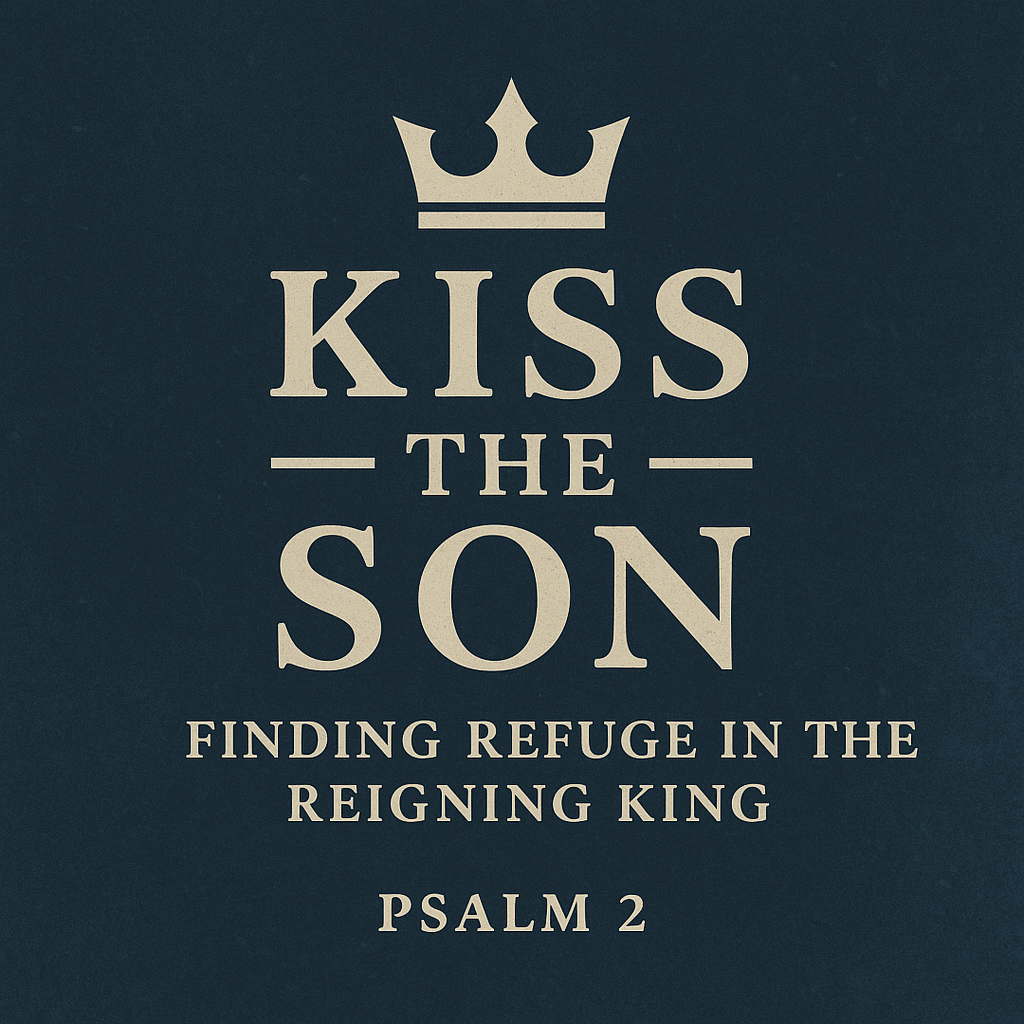
  • Kiss the Son: Finding Refuge in the Reigning King

    Our world is no stranger to rebellion. From headlines to hashtags, we see it—nations raging, people plotting, the world pushing against any notion of divine authority. But none of this surprises God.

    Psalm 2 shows us that rebellion is not a new thing—it’s the natural posture of the human heart apart from grace. The kings of the earth rise up and say, “Let’s tear off their chains…” They see God’s law as bondage instead of blessing. And whether they know it or not, when they reject the Lord, they are also rejecting His Anointed—ultimately, Jesus Christ.

    But God is not shaken.

    He sits enthroned. He laughs—not in scorn, but in sovereign assurance. His response to rebellion is not anxiety—it’s proclamation: “I have installed my King.” This isn’t a political reaction. It’s a redemptive reality.

    Psalm 2 declares a King who is both Savior and Judge. “You are my Son,” God says, and Jesus is that Son. The nations belong to Him. Judgment is real. And yet, before the rod of iron falls, a cross of mercy stands.

    The psalm ends with a plea: “Kiss the Son… All who take refuge in Him are blessed.” Even rulers are invited to bow in worship. Reverence and joy go hand-in-hand. Worship isn’t casual; it’s a trembling delight in the reign of Christ.

    Here’s the good news: The King who has the right to crush us is the One who offers us shelter. There is safety—refuge!—in surrendering to Him. The safest place in the universe is at the feet of Jesus.

    Don’t fear the chaos of the age. Don’t follow the rebellion of the world. Fear the Lord. Kiss the Son. And find your rest in His reign.

  • Two Paths. One Savior.

    This past Sunday was a special one — my first Sunday as pastor at Star Hope Baptist Church. And there’s no better place to begin than Psalm 1.

    Psalm 1 is more than the first chapter in the Psalms — it’s the front door to the whole book. It invites us in… and it also forces us to decide.

    There are only two paths in life, the psalmist says:
    – One that’s rooted, fruitful, and known by God.
    – And one that’s hollow, drifting, and headed toward ruin.

    We don’t like stark choices like that. But Psalm 1 is lovingly clear. And it doesn’t just show us the difference between the righteous and the wicked — it shows us the difference between real life and spiritual death.

    The way of the righteous is marked by delight in God’s Word. Not just reading it out of duty, but loving it. Meditating on it. Letting it shape how we think, how we live, how we treat people.

    The blessed person in Psalm 1 is like a tree — planted, nourished, strong. That kind of life doesn’t come from self-help. It comes from being rooted in God’s truth.

    The wicked, on the other hand, are compared to chaff — that thin, useless husk that blows away in the wind. It looks like something… until the storm hits. And then it’s gone.

    I told a story Sunday about two friends. One stayed grounded in Scripture and stood strong through trial. The other slowly drifted from God’s Word — and when life hit hard, he had nothing to hold him. That’s not just an illustration. It’s real life. I’ve seen it again and again.

    Psalm 1 calls us to examine our direction.
    Are we being shaped more by the voices of the world… or by the voice of God?
    Are we building lives that will stand… or lives that will scatter when the winds pick up?

    Here’s the good news: Jesus is the truly Blessed Man. He walked the path of righteousness for us. He rejected evil, delighted in the Father’s will, and bore our judgment on the cross. Now, by faith in Him, we can be planted — forgiven, fruitful, and secure forever.

    So the question Psalm 1 asks us is simple and urgent:

    Which path are you on?

    One leads to life.
    One leads to ruin.
    And only one Savior can put you on the right road.

    Let’s be people of the Word.
    Let’s be rooted.
    Let’s walk the path that leads to life.