Category: Uncategorized

  • Peace and Gratitude: How Gospel Community Changes Everything

    When we think about church, it’s easy to imagine it as a building, a service, or a weekly obligation. But Paul reminds us in Colossians 3 that the church is meant to be much more than that. It’s a community shaped by the Gospel: a living, breathing, messy, beautiful family of people learning to live together under the rule of Christ’s peace.

    Paul writes, “Let the peace of Christ rule in your hearts, to which you were also called in one body. And be thankful.” (Col. 3:15) That’s not just a nice suggestion. It’s a bold call to action for every believer.

    Peace Guides Our Unity

    The word Paul uses for “rule” is powerful. It’s the same word used for an umpire calling the game. In other words, Christ’s peace is the ultimate referee in our relationships. When conflicts arise, when opinions clash, when personalities rub against each other, His peace is the final authority. It tells us when to hold our tongue, when to step forward, and when to choose reconciliation over pride.

    Peace is not passive. It’s active, intentional, and Gospel-driven. It flows out of knowing we’ve been forgiven, loved, and chosen by God. And it’s what makes a body of believers more than a group of individuals—it makes us one.

    Gratitude Warms the Fellowship

    Paul doesn’t leave us without a tool to help keep peace in place: gratitude. “And be thankful,” he says. Gratitude is more than politeness or saying thanks. It is a posture of the heart that shapes the culture of a church.

    Grateful people overlook small offenses. Grateful people encourage one another. Grateful people notice God’s work in the ordinary moments of life. A church filled with gratitude becomes a joyful place to gather, a refuge for weary souls, and a community that reflects the light of Christ to the world.

    Unity Requires Effort

    Here’s the catch: unity doesn’t just happen. Gospel community is cultivated. Paul assumes that effort is required. It’s like he know that talks, apologies, patience, bearing with one another’s weaknesses must be a part of our relationships. It’s choosing peace when it would be easier to withdraw. It’s acting with kindness when bitterness tempts you.

    And it’s always anchored in the Gospel. Why? Because the cross reconciles us not only to God but also to one another. When we remember that Christ has torn down the walls of sin and built a bridge of peace, it becomes easier to step across to someone else.

    The Result: A Visible Gospel

    When a church practices peace, gratitude, and intentional unity, it doesn’t just feel good inside—it becomes a witness. A community like that points the world to the reconciling power of Christ. Strangers notice it. Members grow in faith and love. Hearts that were hardened begin to soften.

    Practical Takeaways

    • Start with your own heart: Are you walking in Christ’s peace personally? That’s where it begins.
    • Practice gratitude daily: Thank God for His work in your life and in others. Gratitude rewires how you see conflict and community.
    • Invest in relationships intentionally: Apologize, forgive, listen, and encourage. Unity is maintained brick by brick.

    A Gospel-shaped church isn’t perfect. It’s a family learning to live under the authority of Christ together. And when His peace rules and gratitude fills the hearts of His people, the world sees something different…something unmistakably Kingdom-shaped.
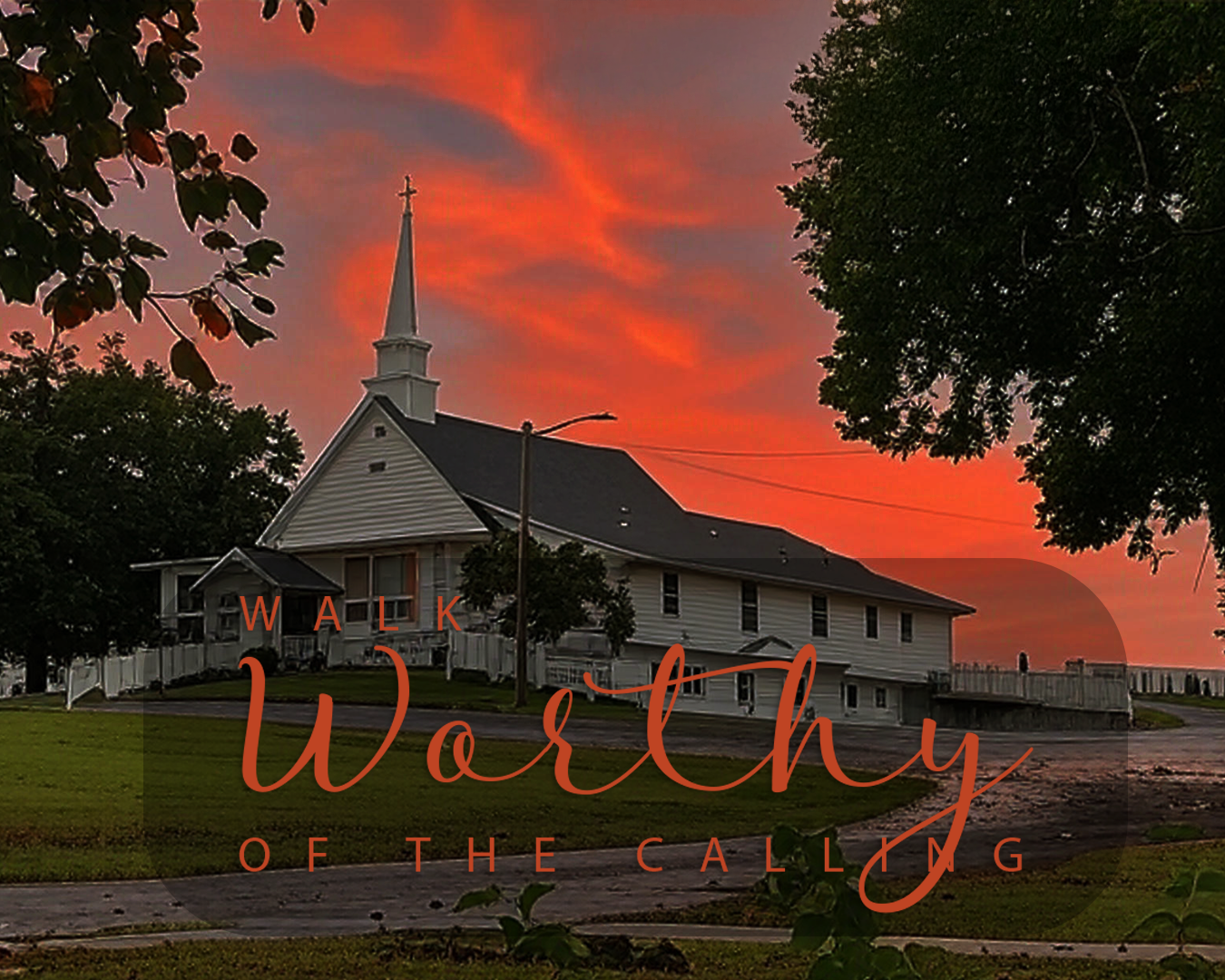
  • Walking Worthy: The Seven “Ones” That Hold Us Together

    When Paul wrote Ephesians 4:1–6, he gave the church a challenge that is just as relevant today: “Walk worthy of the calling you have received.” But what does that actually mean? And how can we live it out in a world full of division, disagreement, and distraction?

    Walking Worthy Means Living Like Christ

    The word “walk” isn’t just about your steps—it’s your lifestyle, your daily decisions, your interactions with others. And “worthy” doesn’t mean you deserve God’s love; it means your life should match the calling God has already given you. That calling includes salvation, adoption into God’s family, and being part of the body of Christ.

    In practical terms, walking worthy looks like:

    • Humility: not thinking more highly of yourself than you ought
    • Gentleness: strength under control
    • Patience: bearing with one another
    • Love: enduring even when others frustrate you
    • Unity: making every effort to maintain the bond that Christ has already given

    Paul isn’t asking us to manufacture unity from scratch; he’s reminding us that the Spirit has already done the hard work. Our responsibility is to maintain it, and we do that through what he calls the “bond of peace.”


    The Bond of Peace

    Peace here isn’t just feeling calm or avoiding conflict. It’s gospel peace, the kind Christ secured on the cross (Ephesians 2:14–18). It’s the reconciliation that binds Jew and Gentile, sinner and saint, together in one body. Think of it like the ligaments in your body—without them, everything falls apart. The “bond of peace” holds the church together.

    Living in that peace means we don’t ignore conflict—we reconcile quickly, forgive freely, and love sacrificially. In other words, our unity flows from Christ’s work, not our feelings.


    The Seven “Ones” That Make Unity Possible

    Paul then grounds this unity in seven unshakeable realities. These are not abstract ideas—they are the foundation of the church and the practical strands that hold us together:

    1. One Body – All believers united in Christ. Unity isn’t optional; we belong to each other.
    2. One Spirit – The Holy Spirit indwells every believer. We depend on Him, not our own strength, for unity.
    3. One Hope – Resurrection and eternal life. This shared hope keeps us moving forward, even in conflict.
    4. One Lord – Jesus Christ is Lord of all. Submitting to Him protects us from pride and division.
    5. One Faith – Salvation by grace through faith. Secondary differences may exist, but the gospel is non-negotiable.
    6. One Baptism – Spirit baptism into Christ, expressed in water baptism. This marks every believer as part of the same body.
    7. One God and Father – Over all, through all, and in all. Sharing the same Father reminds us to treat each other like family.

    Each “one” is a thread in the rope of unity. Alone, each thread is strong, but together, they hold the church tightly in Christ.


    Why This Matters Today

    Walking worthy of your calling isn’t about perfection—it’s about faithful, Christlike living in the midst of real people, real differences, and real challenges. Unity doesn’t happen because everyone thinks the same or behaves the same. Unity happens because we all share the same Spirit, hope, Lord, faith, baptism, and Father.

    When your church, small group, or even your family reflects these “ones,” the world sees Jesus at work. That’s exactly what He prayed for in John 17: that His followers would be one, just as He and the Father are one.


    A Prayer for Unity

    “Father, thank You for binding us together in Christ. Help us to live as one body, filled with one Spirit, clinging to one hope, under one Lord, holding one faith, marked by one baptism, and loved by one Father. Amen.”